
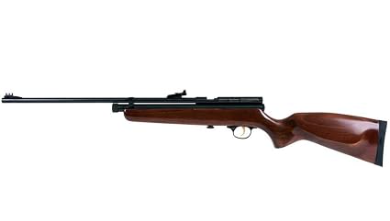
The best CO2 air rifles for pest control offer a convenient combination of low recoil, easy handling, consistent performance, and relatively quiet operation. I find them particularly useful for close to moderate range pest control because they are simple to operate and do not require the pumps or compressors associated with PCP air rifles.
The right caliber, accuracy, power, and shot count can make a significant difference when dealing with common pests around a property.
In this guide, I’ll cover the key features, my top CO2 air rifle picks, important factors to consider before buying, and frequently asked questions.
CO2 vs PCP Air Rifles for Pest Control
CO2 and PCP air rifles can both be effective for pest control, but they suit different needs. CO2 rifles are generally simpler and more convenient, while PCP rifles offer higher power, greater shot consistency, and better performance at longer distances.
| Feature | CO2 Air Rifle | PCP Air Rifle |
|---|---|---|
| Power | Low to moderate | Moderate to high |
| Effective Range | Close to moderate | Moderate to long |
| Recoil | Very low | Very low |
| Shot Count | Moderate | High |
| Power Consistency | Can decline as CO2 pressure drops | Generally more consistent |
| Cold Weather | Performance can decrease | Less affected by temperature |
| Charging | Simple CO2 cartridges | Pump, compressor, or air tank |
| Maintenance | Relatively simple | More equipment and maintenance |
| Portability | Excellent | Good, but charging equipment adds bulk |
| Cost of Operation | Convenient for occasional use | Better suited to frequent shooting |
CO2 Air Rifles
CO2 rifles are convenient for close range pest control because they are easy to operate, portable, and require minimal equipment. They also offer low recoil and relatively quiet operation, although cold temperatures can reduce their performance.
PCP Air Rifles
PCP rifles are better suited to higher power, longer ranges, and more frequent use. They generally provide greater consistency and shot capacity, but require a pump, compressor, or air tank for refilling.
Which Is Better?
For simple, close range pest control, CO2 is the more convenient choice. For greater power, longer range, and frequent use, PCP is generally the better option.
Best CO2 Air Rifle for Pest Control
1) Beeman QB78-22 CO2 Air Rifle (.22 Caliber)
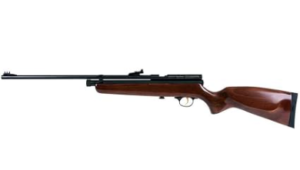
The Beeman QB78-22 is a practical CO2 air rifle for pest control, combining a .22 caliber pellet, 650 FPS velocity, and a 21.5 inch rifled barrel. Its moderate power makes it well suited to squirrels, rats, pigeons, and similar pests at sensible distances, with 30 to 40 yards being a realistic range for consistent pest control. The bolt action is simple and reliable, while the single shot design encourages careful shot placement.
Accuracy is another reason this rifle works well for pest control. The rifled alloy steel barrel is designed for consistent pellet stabilization, and the adjustable trigger can be tuned for a cleaner release. It also comes with adjustable front and rear sights, while the 11mm dovetail rail makes it easy to add a suitable scope for more precise aiming at longer distances.
The QB78-22 uses two 12g CO2 cartridges and produces approximately 30 to 45 shots per fill. CO2 operation provides a smoother shooting experience than many break barrel rifles, although performance can decline in colder temperatures. The European hardwood stock also gives the rifle a more traditional feel than many inexpensive air rifles, while its 6 pound weight keeps it manageable for pest control around the property.
Overall, the Beeman QB78-22 offers a good combination of .22 caliber performance, accuracy, adjustable controls, and affordable CO2 operation, making it a strong choice for close to moderate range pest control.
Specifications
| Spec | Detail |
|---|---|
| Brand | Beeman |
| Model | QB78-22 |
| Caliber | .22 |
| Velocity | 650 FPS |
| Action | Bolt action, single shot |
| Power Source | Two 12g CO2 cartridges |
| Shots per Fill | Approximately 30 to 45 |
| Barrel Length | 21.5 inch rifled alloy steel |
| Overall Length | 40 inches |
| Weight | 6 lbs |
| Frame | Synthetic |
| Stock | European hardwood, blued finish |
| Sights | Adjustable front and rear open sights |
| Rail | 11mm dovetail |
| Trigger | Adjustable with manual safety |
| Finish | Blued steel barrel |
Pros
- .22 caliber provides useful pest control performance
- 650 FPS velocity offers a good balance of speed and pellet weight
- 21.5 inch rifled barrel supports good accuracy
- Adjustable trigger helps with precise shot placement
- European hardwood stock provides a traditional feel
- 11mm dovetail rail allows scope installation
- Approximately 30 to 45 shots per CO2 fill
- Suitable for squirrels, rats, pigeons, and similar pests at moderate distances
- Single shot design encourages deliberate shooting
- CO2 operation provides smooth, low recoil shooting
Cons
- CO2 performance can drop in cold temperatures
- Loudness can vary depending on CO2 pressure and pellet choice
2) Crosman 2240 Bolt Action .22 Cal CO2 Air Pistol
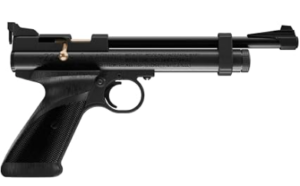
The Crosman 2240 is a compact .22 caliber CO2 air pistol that can work well for close range pest control. Its .22 caliber pellet offers more impact than typical .177 caliber CO2 pistols, while the rifled alloy steel barrel helps with accuracy. With a velocity of up to 460 FPS, it is best suited to smaller pests at 15 to 25 yards, where precise shot placement is important.
The bolt action is simple and reliable, although it is a single shot design. Each pellet must be loaded manually, making deliberate shooting more important and limiting follow up shots. The fully adjustable rear sight also helps fine tune the point of aim for close range pest control.
One of the biggest advantages of the 2240 is its compact and lightweight design. At just 1.81 pounds and 11.125 inches long, it is easy to carry and maneuver around a property. The ambidextrous synthetic grip provides a comfortable hold, while the metal frame gives the pistol a solid feel.
The Crosman 2240 also has a large aftermarket following, making it one of the more customizable CO2 air pistols available. Longer barrels, carbine stocks, and other accessories can change its capabilities considerably. For a simple stock setup, however, its relatively modest power means it is better considered a close range pest control option rather than a substitute for a full size air rifle.
Specifications
| Spec | Detail |
|---|---|
| Brand | Crosman |
| Caliber | .22 |
| Velocity | Up to 460 FPS |
| Action | Bolt action, single shot |
| Power Source | 12g CO2 cartridge |
| Shots per CO2 | 40 to 60 |
| Barrel | Rifled alloy steel |
| Length | 11.125 inches |
| Weight | 1.81 lbs |
| Frame | Metal, zinc alloy |
| Sights | Open rear, fully adjustable |
| Grip | Ambidextrous synthetic, ergonomic |
| Warranty | 1 year limited |
Pros
- .22 caliber provides useful impact for small pests
- Rifled alloy steel barrel supports good accuracy
- Up to 460 FPS is suitable for close range pest control
- 40 to 60 shots per CO2 cartridge
- Compact and lightweight design
- Fully adjustable rear sight
- Metal frame provides a solid feel
- Ambidextrous ergonomic grip
- Large aftermarket for customization
- Simple bolt action operation
- Good value for a compact CO2 pest control option
Cons
- Pistol format makes longer range precision more difficult
- CO2 performance decreases in cold weather
3) Beeman AR2078A .177 CO2 Air Rifle
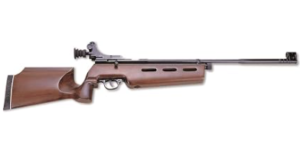
The Beeman AR2078A is a precision focused CO2 air rifle designed for close range pest control. Its .177 caliber, 650 FPS velocity, and 21.5 inch rifled steel barrel provide a useful combination for dealing with smaller pests such as rats, mice, pigeons, and sparrows. For consistent results, I would keep its practical pest control range around 25 to 30 yards, where its accuracy and precise shot placement can be put to good use.
The 21.5 inch rifled barrel is one of its strongest features for accuracy. The rifle also uses fully adjustable diopter peep sights with interchangeable front sights, giving you a more precise sight picture than basic open sights. An 11mm dovetail rail is included if you prefer to add a scope or red dot for additional aiming precision.
The two stage adjustable trigger has an approximately 1 pound pull, which makes it easier to release the shot without disturbing your aim. Its competition style biathlon stock and rubber butt pad provide a stable shooting position, although the rifle’s 7.8 pound weight and front heavy balance can become tiring during longer pest control sessions.
The AR2078A uses two 12g CO2 cartridges and provides approximately 60 shots per fill. Its low to medium noise level is also useful when discreet shooting is important. However, CO2 performance can decrease in cold weather.
Specifications
| Spec | Detail |
|---|---|
| Brand | Beeman |
| Caliber | .177 |
| Velocity | 650 FPS |
| Action | Bolt action, single shot |
| Power Source | Two 12g CO2 cartridges |
| Shots per Fill | Approximately 60 |
| Barrel | 21.5 inch rifled steel |
| Overall Length | 39.5 inches |
| Weight | 7.8 lbs |
| Frame | Wood stock / metal barrel |
| Sights | Fully adjustable diopter peep with interchangeable front sights |
| Rail | 11mm dovetail |
| Trigger | Two stage adjustable, approximately 1 lb pull |
| Safety | Manual |
| Loudness | Low to medium |
| Stock | Competition style biathlon stock with rubber butt pad |
Pros
- 650 FPS velocity provides useful performance for small pests
- 21.5 inch rifled steel barrel supports excellent accuracy
- Fully adjustable diopter sights allow precise aiming
- Light two stage trigger helps with careful shot placement
- Approximately 60 shots per CO2 fill
- 11mm dovetail rail supports scope or red dot installation
- Low to medium noise level
- Stable competition style stock
- Metal barrel provides good durability
- Suitable for rats, mice, pigeons, and sparrows
Cons
- .177 caliber offers less impact than .22 for larger pests
- Single shot action slows follow up shots
4) Crosman Full Auto R1 CO2 BB Air Rifle
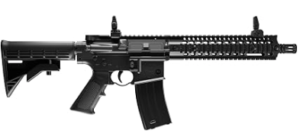
The Crosman Full Auto R1 is a CO2 powered BB air rifle with both semi automatic and full automatic firing modes. Its 430 FPS velocity and .177 caliber steel BBs make it more suitable for very close range pest control, particularly around barn or property areas where rats may be a problem. However, its limited power and BB only ammunition make it less practical for precise pest control than a rifled pellet firing air rifle.
The full automatic mode can fire at up to 1,400 rounds per minute, while the 25 round drop out magazine allows quick follow up shots. This high rate of fire can be useful when dealing with multiple pests, but it also consumes CO2 quickly. The semi automatic mode is a better choice when deliberate aiming and ammunition conservation are more important.
The R1 also offers several features that make it comfortable and versatile to handle. Its 6 position adjustable stock allows the rifle to be fitted to different shooting positions, while the quad Picatinny rails provide space for accessories such as a red dot sight. The steel barrel contributes to accuracy, although the use of spherical BBs means it cannot match the precision or consistency of a pellet firing rifle.
Specifications
| Spec | Detail |
|---|---|
| Brand | Crosman |
| Caliber | .177 (4.5mm steel BBs only) |
| Velocity | Up to 430 FPS |
| Action | Full automatic and semi automatic |
| Rate of Fire | Up to 1,400 rounds per minute |
| Power Source | Two 12g CO2 cartridges |
| Capacity | 25 round drop out magazine |
| Barrel | Steel |
| Frame | Synthetic |
| Stock | 6 position adjustable |
| Rails | Quad Picatinny rails |
| Ammo | Steel BBs only |
| Weight | Realistic, heavy feel |
| Warranty | 1 year limited |
Pros
- Full automatic and semi automatic firing modes
- 25 round magazine allows quick follow up shots
- Up to 1,400 rounds per minute in full automatic mode
- Adjustable stock provides a customizable shooting position
- Quad Picatinny rails accommodate aiming accessories
- Steel barrel provides better accuracy than a smooth bore
- Blowback action provides realistic handling
- Two CO2 cartridges provide convenient operation
- Widely available 4.5mm BB ammunition
- Useful for very close range pest deterrence
Cons
- 430 FPS provides limited pest control power
- Steel BBs are less accurate than pellets
You may also like to read:
5 Best Spring Air Rifle for Pest Control
7 Best Air Rifles for Pest Control
Advantages of Using the Best CO2 Air Rifle for Pest Control
Low Recoil and Easy Handling
CO2 air rifles produce very little recoil, making them easier to control than many spring powered air rifles. This helps maintain a steady aim and makes precise shot placement easier, especially during repeated pest control sessions.
Consistent Shooting Performance
CO2 systems provide relatively consistent velocity during normal shooting conditions. This makes them suitable for controlled pest control work where predictable pellet or BB placement is important. Performance can vary as the CO2 pressure drops or temperatures change, so proper operating conditions still matter.
Quieter Operation
CO2 air rifles are generally much quieter than firearms, making them more practical for pest control around properties where excessive noise is a concern. Noise levels vary between models, ammunition, and shooting conditions, but they can provide a more discreet option for close range pest control.
Affordable and Convenient Power Source
CO2 cartridges are widely available and easy to replace, eliminating the need for a hand pump, compressor, or other charging equipment. This makes CO2 air rifles convenient for occasional pest control and short shooting sessions.
Good Accuracy for Close Range Pest Control
Rifled barrels, adjustable sights, and compatible scope rails can provide good accuracy at the shorter distances where CO2 air rifles are most effective. Choosing the appropriate caliber and ammunition also helps improve shot placement and consistency.
Minimal Maintenance and Simple Operation
CO2 air rifles generally have a straightforward operating system with fewer charging requirements than PCP rifles. They are easy to load, carry, and prepare for a shooting session, making them convenient for routine pest control around a property.
Factors to Consider When Choosing the Best CO2 Air Rifle for Pest Control
Caliber and Power
Caliber and muzzle energy determine how effectively an air rifle can handle different pests. A .177 caliber can work well for smaller pests at close range, while .22 generally provides greater impact for larger pests. Rather than focusing only on FPS, consider the combination of caliber, pellet weight, and muzzle energy for the type of pest you intend to control.
Effective Range
Consider the distance at which you expect to take pest control shots. CO2 air rifles are generally better suited to close and moderate ranges, with practical performance depending on power, accuracy, ammunition, and conditions. Choosing a rifle that can maintain consistent accuracy at your typical shooting distance is more important than simply choosing the highest advertised velocity.
Accuracy and Barrel Quality
A quality rifled barrel can significantly improve pellet stability and shot consistency. Adjustable sights or a scope rail can further help with precise aiming. For pest control, reliable accuracy is particularly important because precise shot placement matters more than simply having high velocity.
CO2 Capacity and Shot Count
Check how many shots the rifle can produce from its CO2 supply before performance starts to decline. A higher shot count is useful for extended pest control sessions because it reduces the need for frequent cartridge changes. Keep in mind that larger calibers and rapid firing can consume CO2 faster.
Action and Loading System
The action affects how quickly and conveniently you can take follow up shots. Single shot and bolt action designs encourage deliberate shooting and can be excellent for precise pest control, while semi automatic systems allow faster follow up shots. Choose the setup that matches your need for precision, speed, and ammunition conservation.
Trigger, Sights, and Mounting Options
A predictable trigger and adjustable sights make it easier to place shots accurately. An 11mm dovetail or Picatinny rail can also provide the option to add a scope or other aiming accessory. These features become particularly useful when shooting toward the upper end of the rifle’s practical range.
Reliability and Weather Performance
A CO2 air rifle should operate reliably throughout repeated shooting sessions, but CO2 pressure is affected by temperature. Cold weather can noticeably reduce velocity and shot consistency, so consider how and when you will use the rifle. Build quality, seal reliability, and overall durability are also important when the rifle will be used regularly outdoors.
Best CO2 Air Rifle for Pest Control FAQs
Are CO2 air rifles good for pest control?
Yes, CO2 air rifles can be effective for close and moderate range pest control when matched with the right caliber, power, and ammunition. They are particularly useful for smaller pests, but practical range and effectiveness depend heavily on accurate shot placement and the rifle’s muzzle energy.
What caliber is best for pest control with a CO2 air rifle?
A .177 caliber is generally suitable for smaller pests such as mice, rats, and small birds, while .22 caliber provides more impact and can be a better choice for somewhat larger pests. The best caliber ultimately depends on the size of the pest, shooting distance, and the rifle’s available power.
How far can a CO2 air rifle effectively control pests?
Most CO2 air rifles are best used at relatively short distances because CO2 pressure, velocity, and accuracy limit their practical range. Depending on the rifle and target, approximately 15 to 40 yards is a reasonable general range, with more powerful and accurate models performing better toward the upper end.
Conclusion
The best CO2 air rifles for pest control offer a convenient balance of low recoil, manageable noise, easy operation, and dependable close to moderate range performance. I found that caliber, accuracy, muzzle energy, shot count, and CO2 performance are more important than velocity alone when choosing the right option.
For smaller pests, a precise .177 caliber rifle can work well, while a .22 caliber option provides greater impact for larger pests. Overall, choosing a reliable CO2 air rifle that matches your target pest and typical shooting distance will give you the best results while keeping operation simple and practical.