
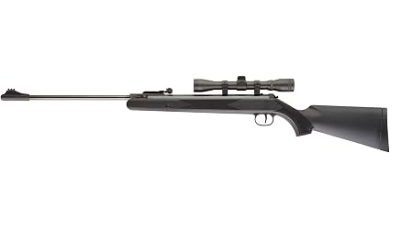
A quality spring air rifle can be an excellent choice when in need of a practical, affordable, and self contained option for pest control. These rifles offer reliable spring piston power without requiring CO2 cartridges or compressed air, while providing the accuracy and energy needed for appropriately sized pests at close to moderate distances.
In this guide, I’ll cover the key features that matter most, my top picks for the best spring air rifle for pest control, and the factors I consider when choosing the right caliber, power, accuracy, cocking effort, and sighting system. I’ll also finish with frequently asked questions to help you make a more informed choice and select a rifle that fits your pest control needs.
Best Spring Air Rifle for Pest Control
1) Umarex Ruger Blackhawk .177 Caliber Spring Piston Air Rifle
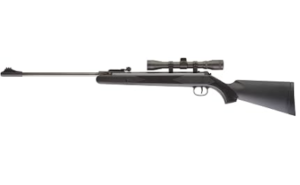
The Umarex Ruger Blackhawk .177 Caliber Spring Piston Air Rifle is a practical entry level option for pest control, particularly for rats, mice, squirrels, starlings, sparrows, and other small pests at close to mid range. With approximately 12 ft lbs of energy and a reported velocity of up to 1,200 fps with alloy pellets, it offers useful performance for a budget spring air rifle. Its sweet spot is around 20 to 35 yards, where careful shot placement can make the most of its capabilities.
One of its biggest advantages is the simple spring piston, break barrel design. It requires no CO2 cartridges or compressed air fills, making it convenient for occasional pest control around a property. The single shot action is straightforward to operate, although it does mean follow up shots are slower than with a multi shot rifle. The 30 lb cocking effort is also worth considering, especially for shooters who prefer an easier cocking cycle.
The rifle combines a rifled metal barrel with fiber optic front sights and a fully adjustable rear sight. Owner feedback includes reports of good accuracy after sighting in, including groups around half an inch at 25 yards. For close range pest control, this can provide the precision needed for small targets. The rifle is better suited to deliberate, close range shooting than extended range pest control.
The all weather ambidextrous composite stock adds versatility for both left and right handed shooters, while the checkered grip and forearm provide a secure hold. At 3 lbs, the rifle is relatively light and convenient to carry around a yard or garden. Its compact handling characteristics make it appealing for extended pest control sessions, although the cocking effort can make repeated shots more demanding.
The included 4x32mm scope makes the Ruger Blackhawk particularly attractive as a budget package. The scope is air rifle rated and comes with mounting rings, giving beginners everything needed to get started without purchasing a separate optic immediately.
Specifications
| Specification | Detail |
|---|---|
| Caliber | .177 (4.5mm) |
| Power Type | Spring piston, break barrel |
| Action | Single shot |
| Velocity | Up to 1,200 fps with alloy pellets |
| Lead Pellet Velocity | Approximately 1,000 fps |
| Muzzle Energy | Approximately 12 ft lbs |
| Cocking Effort | 30 lbs |
| Trigger Pull | 3.3 lbs |
| Overall Length | 44.8 inches |
| Weight | 3 lbs |
| Stock | Ambidextrous composite polymer |
| Barrel | Rifled metal |
| Sights | Fiber optic front, adjustable rear |
| Included Scope | 4x32mm |
| Scope Mount | 11mm dovetail rings |
| Best Use | Pest control, plinking, target shooting |
| Approximate Price | $80 to $120 |
Pros
- Affordable entry level spring piston rifle
- Scope and mounting rings included
- Lightweight 3 lb design
- Ambidextrous all weather stock
- Fiber optic sights allow quick target acquisition
- Rifled metal barrel supports practical accuracy
- No CO2 cartridges or compressed air fills required
- Useful power for small pest control at close range
- Good value for first time air rifle owners
- Suitable for rats, mice, squirrels and similar small pests
Cons
- Relatively loud compared with quieter air rifles
- 30 lb cocking effort can be demanding
The Umarex Ruger Blackhawk .177 is a solid budget spring air rifle for shooters who need a simple and affordable option for close range pest control. Its combination of useful power, practical accuracy, lightweight construction, fiber optic sights, and included scope gives it strong value for beginners. I would consider it particularly suitable for rats, mice, squirrels, pigeons, and other small pests when used within its practical range.
2) Gamo Varmint Air Rifle .177
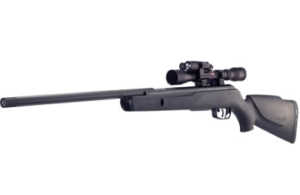
The Gamo Varmint Air Rifle .177 is a genuine spring piston, break barrel air rifle designed for small game hunting, pest control, and target shooting. With approximately 12 to 14 ft lbs of muzzle energy and lead pellet velocities around 900 to 1,000 fps, it provides useful performance for rats, mice, sparrows, squirrels, chipmunks, and rabbits at close to mid range. Its practical pest control range is around 20 to 40 yards, making it a good choice for property owners who need an affordable spring powered rifle for smaller pests.
Power is one of the strongest aspects of the Gamo Varmint. Owner feedback frequently describes it as powerful enough for squirrels and other small pests, with many users reporting successful pest control at appropriate distances. The steel rifled barrel and two stage adjustable trigger also contribute to its accuracy potential. Once properly sighted in and paired with a pellet it prefers, the rifle can produce impressive results within its practical range.
The all weather synthetic Monte Carlo stock makes the rifle well suited to outdoor use. It features raised cheekpieces, a rubber recoil pad, and non slip texturing on the pistol grip and forearm for a secure hold. At 5.47 lbs, it remains manageable for carrying around a property during pest control sessions. The rifle also incorporates an automatic cocking safety, manual safety, and anti beartrap mechanism for added handling protection.
Gamo includes a 4x32mm air rifle rated scope and mount, which means the rifle can be used for pest control without immediately purchasing a separate optic. I would however strongly consider upgrading the optic if accuracy and long term reliability are priorities. The rifle also has no iron sights, so the scope is the only factory aiming system.
Specifications
| Specification | Detail |
|---|---|
| Caliber | .177 (4.5mm) |
| Power Type | Spring piston, break barrel |
| Action | Single shot |
| Velocity | Up to 1,250 fps with PBA alloy pellets |
| Lead Pellet Velocity | Approximately 900 to 1,000 fps |
| Muzzle Energy | Approximately 12 to 14 ft lbs |
| Trigger | Two stage adjustable |
| Cocking Effort | 30 lbs |
| Weight | 5.47 lbs |
| Barrel | Rifled steel with polymer jacket |
| Stock | All weather synthetic Monte Carlo |
| Safety | Automatic cocking safety and manual safety |
| Included Scope | 4x32mm with mount |
| Effective Range | Approximately 20 to 40 yards |
| Best Use | Pest control, small game, target shooting |
| Made In | Spain |
Pros
- Strong power for a budget spring piston rifle
- Effective on small pests such as rats, sparrows, squirrels, chipmunks, and rabbits
- Good accuracy potential once properly sighted in
- Solid build quality for its price range
- Steel rifled barrel supports consistent accuracy
- Excellent value for an entry level pest control rifle
- Lightweight enough for extended property patrols
- All weather synthetic stock is suitable for outdoor use
- Monte Carlo cheekpiece provides a comfortable shooting position
- Rubber recoil pad helps manage shooting comfort
- Non slip grip and forearm texturing provide a secure hold
- 4x32mm scope and mount included
- Automatic cocking safety and manual safety provide added protection
- Anti beartrap mechanism improves handling safety
- Made in Spain
- No CO2 or compressed air supply required
- Can become quieter after the break in period
Cons
- Can be very loud, particularly during the break in period
- Included scope receives considerable criticism for quality and ability to hold zero
The Gamo Varmint .177 is a capable budget spring air rifle for pest control, particularly for shooters dealing with rats, mice, sparrows, squirrels, chipmunks, and rabbits at around 20 to 40 yards. Its combination of useful power, solid construction, practical accuracy, outdoor friendly stock, safety features, and included scope gives it strong value for beginners.
3) Hatsan Mod 95 Spring Combo

The Hatsan Mod 95 Spring Combo is a traditional steel coil spring piston, break barrel air rifle that offers considerably more power and construction quality than many entry level springers. It is available in .177, .22, and .25 calibers and is designed for target shooting, small game, and pest control. We acknowledge its accuracy and power, with reports of successful use against squirrels, rabbits, pigeons, rats, snakes, and other pests. Its combination of a premium walnut stock, adjustable trigger, and German steel barrel makes it an appealing choice for shooters looking for a substantial spring powered rifle.
The Quattro two stage fully adjustable match trigger is one of the rifle’s most appealing features. It allows the shooter to tune the trigger characteristics to their preference, while the precision rifled German steel barrel provides a solid foundation for accuracy. Fiber optic front and rear sights are included, so the rifle remains usable without relying exclusively on the supplied optic. This is particularly useful because feedback on the included 3 to 9×32 Optima scope is mixed.
Build quality is another area where the Mod 95 receives strong praise. The genuine Turkish walnut stock gives it a traditional appearance and a more substantial feel than the synthetic stocks commonly found on budget spring rifles. The stock is ambidextrous and incorporates a rubber buttpad, while Hatsan’s Shock Absorber System is designed to reduce the effects of recoil during shooting. At 7.6 lbs, however, this is a relatively heavy rifle and may become tiring during extended sessions.
The Spring Combo package adds further value by including the 3 to 9×32 Optima scope and mounting rings. However, customer experiences with the scope vary, with some users reporting difficulty maintaining zero and choosing to replace it. The rifle itself receives substantially stronger feedback for its accuracy, power, appearance, and construction. Overall, the Hatsan Mod 95 is a strong choice for those who prioritize traditional spring piston construction, durable materials, adjustable controls, and substantial performance over lightweight handling.
Specifications
| Specification | Detail |
|---|---|
| Caliber | .177, .22, .25 |
| Power Type | Steel coil spring piston |
| Action | Break barrel, single shot |
| Maximum Velocity | Up to 1,300 fps in .177 |
| Maximum Muzzle Energy | Up to 20 FPE |
| Trigger | Quattro 2 stage fully adjustable |
| Barrel | Precision rifled German steel |
| Stock | Genuine Turkish walnut, ambidextrous |
| Sights | Fiber optic front and rear |
| Included Scope | 3 to 9×32 Optima with rings |
| Recoil System | SAS Shock Absorber System |
| Muzzle Brake | Yes |
| Weight | 7.6 lbs |
| CO2 Required | No |
| Best Use | Pest control, small game, target shooting |
Pros
- Genuine steel coil spring piston design
- Strong power for a traditional spring air rifle
- Excellent accuracy potential
- Quattro two stage fully adjustable match trigger
- Precision rifled German steel barrel
- Genuine Turkish walnut stock
- Ambidextrous stock design
- Fiber optic front and rear sights included
- Available in .177, .22, and .25 calibers
- SAS recoil absorption system
- Rubber buttpad improves shooting comfort
- Large muzzle brake
- 3 to 9×32 Optima scope and mounting rings included
- Excellent build quality for the price
- Strong long term ownership reports
- Attractive traditional sporting rifle appearance
- Does not require CO2 cartridges or compressed air
Cons
- Heavy at 7.6 lbs
- Cocking the rifle requires considerable effort
The Hatsan Mod 95 Spring Combo is one of the more substantial traditional spring piston rifles in its price category. Its German rifled steel barrel, Turkish walnut stock, Quattro adjustable trigger, fiber optic sights, and SAS recoil system give it a level of refinement that is impressive for a budget oriented springer.
4) Crosman Optimus .22 Caliber Spring Powered Air Rifle

The Crosman Optimus .22 Caliber Spring Powered Air Rifle is a genuine steel coil spring piston, break barrel rifle that offers a useful balance of power, accuracy, and ease of operation for pest control. With an estimated 16 to 18 ft lbs of energy and velocities of up to 950 fps with alloy pellets, it is better suited to medium sized pests than the .177 version. Customer feedback reports successful use against squirrels, raccoons, and other small game, making this a capable option for moderate pest control at appropriate distances.
One of the rifle’s strongest qualities is its relatively manageable cocking effort compared with heavier springers. This makes it more beginner friendly, although some users still find the cocking cycle demanding. The two stage adjustable trigger works with the rifled stainless steel barrel to provide good accuracy potential, with owners reporting consistent hits on one inch targets at around 35 to 40 yards. A break in period of approximately 100 pellets can help the rifle settle and improve consistency.
The ambidextrous hardwood stock gives the Optimus a traditional appearance and solid feel. Its compact 29.8 inch overall length makes it suitable for smaller framed shooters, while the fiber optic front sight and micro adjustable rear sight provide a useful aiming system without depending on the supplied scope. The 7.1 lb weight does make it heavier than some synthetic stocked alternatives, so a sling may be helpful during extended pest control sessions.
Crosman includes a CenterPoint 4x32mm scope, giving buyers the option of using an optic immediately. Unfortunately, the scope receives considerably weaker feedback than the rifle itself, with many owners describing it as marginal or recommending an upgrade. The fiber optic sights are a useful alternative and may be preferable until a better air rifle rated scope is installed. The rifle also requires no CO2 or compressed air, making it convenient for regular use.
The .22 caliber configuration makes the Optimus particularly attractive for pest control because it provides more energy and pellet mass than the .177 version. Heavy lead pellets such as Crosman Premier Hollow Points, JSB Exact Jumbo, H&N Baracuda Match, or RWS Superdome can be considered depending on the rifle’s accuracy preference and intended target.
Its approximately 16 to 18 ft lbs of energy is well suited to moderate pest control, although larger pests at longer distances may call for a more powerful spring rifle. Overall, the Optimus .22 offers an appealing combination of traditional springer design, manageable cocking, good accuracy potential, and value.
Specifications
| Specification | Detail |
|---|---|
| Model | Crosman Optimus CO8M22X |
| Caliber | .22 |
| Power Type | Steel coil spring piston |
| Action | Break barrel, single shot |
| Velocity | Up to 950 fps with alloy pellets |
| Estimated Muzzle Energy | Approximately 16 to 18 FPE |
| Trigger | Two stage adjustable |
| Stock | Ambidextrous hardwood |
| Barrel | Rifled stainless steel |
| Sights | Fiber optic front and micro adjustable rear |
| Included Scope | CenterPoint 4x32mm |
| Cocking Force | Relatively light |
| Overall Length | 29.8 inches |
| Weight | 7.1 lbs |
| CO2 Required | No |
| Warranty | Limited 1 year |
| Best Use | Moderate pest control, small game, target shooting |
Pros
- Genuine steel coil spring piston design
- Good power for moderate pest control
- Effective on squirrels, raccoons, and other small game
- Approximately 16 to 18 FPE provides useful .22 caliber performance
- Good accuracy potential
- Reports of consistent one inch groups at 35 to 40 yards
- Relatively light cocking force compared with heavier springers
- Beginner friendly operation
- Beautiful ambidextrous hardwood stock
- Rifled stainless steel barrel
- Two stage adjustable trigger
- Fiber optic front sight
- Micro adjustable rear sight
- Excellent alternative to the included scope
- Compact frame suits smaller framed shooters
- Solid and sturdy construction
- Good value for the price
- No CO2 cartridges or compressed air required
- Long term users report continued reliable operation
Cons
- Many users recommend upgrading the scope
- 7.1 lb weight can feel heavy during extended sessions
The Crosman Optimus .22 is a strong value choice for shooters looking for a genuine spring piston rifle for moderate pest control. Its .22 caliber, 16 to 18 FPE energy range, good accuracy potential, manageable cocking effort, hardwood stock, and useful fiber optic sights make it a versatile option for squirrels and other appropriately sized pests. The compact design also makes it particularly appealing to smaller framed shooters.
5) Barra TPR 1200

The Barra TPR 1200 is a genuine spring piston, break barrel air rifle designed for shooters who want high velocity and a tactical appearance at a relatively affordable price. Its .177 caliber configuration produces advertised velocities of up to 1,300 to 1,350 fps, although practical performance with lead pellets is considerably lower. With an estimated 12 to 14 ft lbs of energy, it is best suited to light to moderate pest control involving rats, squirrels, rabbits, and similar sized pests at appropriate distances.
The 18 inch rifled alloy steel barrel provides a solid foundation for accuracy, while the smooth two stage trigger contributes to controlled shooting. Customer feedback includes reports of consistently hitting targets at 25 yards and successful pest control at close range. The adjustable fiber optic front and rear sights provide a useful alternative to the supplied optic, while the 6 inch Picatinny rail allows additional sighting equipment to be mounted.
The TPR 1200 uses a synthetic camouflage stock with an AR style design that gives it a distinctive tactical appearance. Its automatic safety engages when the barrel is broken open, adding an extra layer of handling protection. The rifle weighs approximately 8 lbs, which provides a stable platform but can become tiring during extended pest control sessions. A sling would be useful if you plan to carry it around a larger property.
The included 4x32mm scope gives the rifle a complete package for beginners, but the optic and mounting system receive mixed feedback. Some owners report that the scope has limited usefulness beyond shorter distances, while others have experienced issues with the mounting rail. For more dependable accuracy, I would use the fiber optic sights initially or upgrade to a better air rifle rated scope and ensure the mounting screws remain secure.
Specifications
| Specification | Detail |
|---|---|
| Model | Bear River TPR 1200 |
| Caliber | .177 (4.5mm) |
| Power Type | Spring piston |
| Action | Break barrel, single shot |
| Velocity | Up to 1,300 to 1,350 fps |
| Estimated Muzzle Energy | Approximately 12 to 14 FPE |
| Barrel | 18 inch rifled alloy steel |
| Trigger | Smooth two stage |
| Stock | Synthetic camouflage |
| Sights | Adjustable fiber optic front and rear |
| Included Scope | 4x32mm |
| Scope Rail | 6 inch Picatinny |
| Overall Length | 39.3 inches |
| Weight | 8 lbs |
| CO2 Required | No |
| Warranty | 30 days |
| Best Use | Light to moderate pest control |
Pros
- Genuine spring piston break barrel design
- No CO2 or compressed air required
- Strong power for a budget spring rifle
- High advertised velocity of up to 1,300 to 1,350 fps
- Effective for light to moderate pest control
- Suitable for rats, squirrels, rabbits, and crows
- 18 inch rifled alloy steel barrel
- Good accuracy potential after break in
- Smooth two stage trigger
- Adjustable fiber optic front and rear sights
- 4x32mm scope included
- Picatinny rail allows sighting upgrades
- Tactical AR style design
- Automatic safety engages during barrel opening
- Customers report reliable operation with several pellet types
- Affordable option for shooters seeking high velocity
Cons
- Extremely hard to cock for many users
- Heavy at approximately 8 lbs
The Barra TPR 1200 is an interesting budget spring air rifle that combines high advertised velocity, useful pest control performance, fiber optic sights, an included scope, and a distinctive tactical design. Its .177 caliber and approximately 12 to 14 FPE energy make it best suited to smaller pests at close to moderate distances. The rifled steel barrel and two stage trigger also give it good accuracy potential once the rifle has completed its break in period.
You may also like to read:
8 Best PCP Air Rifle under 1000
5 Best Budget Air Rifle for Pest Control
Advantages of Using the Best Spring Air Rifle for Pest Control
No CO2 or Compressed Air Required
One of the biggest advantages of a spring air rifle is its self contained power system. The spring piston mechanism does not require CO2 cartridges, scuba tanks, compressors, or other external air sources, making the rifle ready to use whenever it is needed. This can reduce ongoing operating costs and makes it convenient for routine pest control around a property.
Reliable Power for Small to Medium Pests
A quality spring air rifle can provide enough energy for dealing with appropriately sized pests at practical distances. Depending on the caliber and power level, these rifles can be effective against rats, mice, squirrels, rabbits, pigeons, and similar pests when used with suitable ammunition and precise shot placement. Choosing the right caliber and energy level is important because larger pests generally require more power.
Good Accuracy at Practical Pest Control Distances
Spring air rifles can deliver excellent accuracy when properly sighted in and paired with pellets that perform well in the individual barrel. Many models discussed can produce consistent groups at distances around 20 to 40 yards, which covers many common pest control situations. A quality trigger, rifled barrel, appropriate scope or iron sights, and consistent shooting technique can further improve practical accuracy.
Lower Cost of Ownership
Spring powered rifles are generally economical to operate because their power source is built into the rifle. Once the initial purchase is made, the primary recurring expense is ammunition rather than CO2 cartridges or compressed air fills. This makes a spring air rifle an attractive option for property owners who expect to handle pests regularly without wanting additional equipment or recurring power costs.
Simple and Durable Design
The traditional spring piston mechanism is relatively straightforward compared with systems that depend on external air supplies or other consumables. A well built spring rifle can provide years of service when properly maintained, and several of the models discussed have received positive feedback for long term durability. This simple design also makes spring air rifles appealing to beginners who want a practical pest control platform without a complicated operating system.
Versatility for Pest Control and Other Shooting
A good spring air rifle can serve several purposes beyond pest control. The same rifle can be used for target practice, recreational shooting, small game where legally permitted, and improving shooting fundamentals. Models available in different calibers and power levels allow shooters to choose a setup suited to smaller pests or more demanding applications, making a quality spring air rifle a versatile addition to an outdoor shooting setup.
Factors to Consider When Choosing the Best Spring Air Rifle for Pest Control
Caliber
Caliber is one of the first things to consider because it affects pellet weight, energy, trajectory, and the size of pests the rifle is appropriate for. A .177 caliber rifle can work well for smaller pests such as rats and sparrows, while .22 caliber generally offers a better balance of pellet weight and energy for squirrels, rabbits, and similar targets. Larger calibers can provide more energy for larger pests, but they may also have different trajectory and ammunition considerations. Always choose a caliber that matches the intended pest and follow applicable hunting and pest control regulations.
Muzzle Energy
Muzzle energy gives you a better indication of a rifle’s practical power than advertised velocity alone. Lightweight alloy pellets can produce impressive velocity figures without necessarily delivering the same useful performance as heavier lead pellets. For pest control, sufficient energy combined with accurate shot placement is important, particularly when dealing with larger pests. Choose a rifle with an appropriate energy level for the pest and range rather than simply selecting the model with the highest advertised velocity.
Accuracy
Accuracy is essential for responsible pest control because a precise shot is more important than raw power. Look for features such as a quality rifled barrel, adjustable trigger, stable stock, and dependable sights or optics. It is also worth considering whether the rifle performs consistently with readily available pellets, since spring air rifles can be pellet sensitive. A rifle that produces predictable groups at the distances you expect to shoot is generally more useful than one with higher specifications but inconsistent accuracy.
Cocking Effort
Spring piston rifles require physical effort to cock, and this can vary significantly between models. A rifle with a high cocking force may become tiring during repeated pest control sessions and can be difficult for smaller or less physically strong shooters to operate. Consider how frequently you expect to shoot and whether you can comfortably cock the rifle multiple times. A manageable cocking effort can make the rifle easier and more practical to use over extended periods.
Effective Range
Consider the distance at which you can realistically expect the rifle to deliver consistent accuracy and sufficient energy. Many budget spring air rifles are better suited to close and moderate ranges rather than extended distances. Factors such as caliber, muzzle energy, pellet selection, barrel quality, and the shooter’s ability all influence practical range. It is better to choose a rifle that performs reliably within your typical pest control distance than to rely on advertised maximum ranges.
Trigger and Shooting Characteristics
A predictable trigger can make it easier to place shots accurately, particularly when dealing with small targets. Adjustable two stage triggers allow shooters to tailor the pull to their preferences, while a comfortable stock and effective recoil management can help maintain consistency. Traditional spring rifles can also produce noticeable vibration and recoil, which may affect accuracy and scope performance if the rifle is not handled correctly. Look for a setup that feels comfortable and controllable when shouldered and fired.
Sights and Scope Quality
A reliable sighting system is crucial because even a powerful rifle is of limited use if you cannot consistently place shots where intended. Fiber optic or adjustable iron sights provide a useful backup, while a suitable air rifle scope can make precise aiming easier at moderate distances. If a rifle includes an inexpensive scope, consider whether you may need to upgrade it. A durable optic and secure mounting system are particularly important on spring piston rifles because their repeated recoil and vibration can be demanding on scopes.
Weight, Stock and Overall Handling
Weight and handling affect how comfortably you can carry, aim, cock, and shoot the rifle during pest control sessions. Heavier rifles can provide stability but may become tiring when carried around a large property, while lighter models are easier to maneuver but may transmit more movement during shooting. An ambidextrous stock, comfortable cheekpiece, secure grip, and suitable length can also improve handling. Choose a rifle that feels balanced and comfortable for your body size and the environment in which you expect to use it.
FAQs
What caliber is best for pest control with a spring air rifle?
A .22 caliber is generally a versatile choice for pest control because it provides more pellet weight and energy than .177 while still offering a practical trajectory at typical pest control distances. A .177 can be effective for smaller pests such as rats, mice, and sparrows, while larger calibers can be considered when more energy is appropriate. The best choice ultimately depends on the size of the pest, shooting distance, rifle energy, and local regulations.
How far can a spring air rifle effectively control pests?
Most budget spring air rifles are best used at close to moderate distances, commonly around 20 to 40 yards depending on the rifle, caliber, pellet, and shooter’s accuracy. Beyond that range, pellet trajectory and declining energy can make precise shot placement more difficult. For responsible pest control, it is better to stay within the distance where the rifle consistently produces accurate shots and sufficient energy.
Are spring air rifles good for pest control?
Yes, a suitable spring air rifle can be effective for controlling appropriately sized pests when used responsibly and within its capabilities. They offer self contained power, relatively low operating costs, practical accuracy, and sufficient performance for many small to medium pests. Choosing the correct caliber, energy level, ammunition, and shooting distance is important, as is following all applicable laws and ensuring a safe backstop.
Conclusion
Choosing the best spring air rifle for pest control ultimately comes down to matching the rifle’s caliber, power, accuracy, range, and handling characteristics to the pests you need to manage. From the options discussed, I found that spring piston rifles offer a practical combination of self contained power, affordable operation, and reliable performance without requiring CO2 or compressed air.
A .22 caliber option is generally a versatile choice for moderate pest control, while .177 can be suitable for smaller pests at closer distances. Before making a purchase, I recommend considering cocking effort, sight quality, weight, effective range, and pellet compatibility, while always following local laws and prioritizing safe, responsible shot placement.