
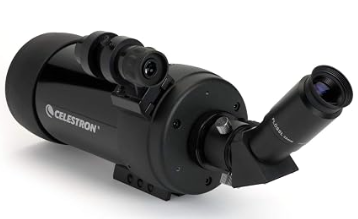
The best spotting scopes for birding and astronomy offer powerful magnification, bright optics, and detailed views of distant birds, wildlife, and celestial objects.
Their adjustable zoom, quality lens coatings, and light gathering capabilities make them versatile tools for outdoor enthusiasts who want to explore nature and enjoy casual stargazing with one device.
This guide covers the key features to look for, top spotting scope picks, essential buying factors, and frequently asked questions to help you choose a model that fits your budget and viewing needs.
What to Look for in a Spotting Scope for Astronomy
A spotting scope can be a practical choice for casual astronomy, especially for observing the Moon, lunar craters, and some bright celestial objects. Higher magnification helps reveal details, while a larger objective lens gathers more light for brighter views.
However, stable tripod support and good optical quality are essential for sharp images. Although spotting scopes are versatile enough for birding and stargazing, a dedicated astronomical telescope is generally better for detailed planetary observation and deep sky viewing.
The options below offer different combinations of magnification, optical performance, portability, and price to suit different viewing needs.
Below is a Summary Guide of the best spotting Scope for Birding and Astronomy
- Vortex Razor HD 16-48×65 Angled Spotting Scope – Best Overall
- Celestron C90 Maksutov-Cassegrain Spotting Scope – Best Compact Astronomy Option
- Celestron C5 Schmidt-Cassegrain Spotting Scope – Best for Astronomy and Lunar Detail
- Gosky 25-75×80 Spotting Scope – Best for High Magnification on a Budget
- Gosky 20-60×85 Spotting Scope – Best Value for Birding and Wildlife Viewing
- SVBONY SV28 25-75×70 Spotting Scope – Best Ultra Budget Option
Best Spotting Scope for Birding and Astronomy
1) Vortex Razor HD 16-48×65 Angled Spotting Scope 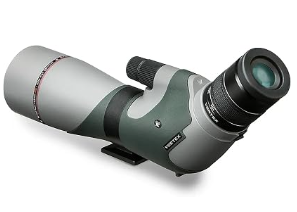
The Vortex Razor HD 16-48×65 Angled Spotting Scope is a premium option for birding, wildlife observation, and casual astronomy. Its variable 16x to 48x magnification allows users to scan wide areas before zooming in on distant birds, lunar features, and other fine details. The 65mm objective lens gathers light for bright, detailed views in suitable observing conditions.
Its high definition extra low dispersion glass and triplet apochromatic lens system help control color fringing while maintaining sharpness and natural color reproduction. Fully multi coated XR optics improve light transmission and contrast, making this scope useful for observing birds in varied daylight conditions and viewing the Moon at higher magnifications. Actual brightness and image quality depend on lighting and atmospheric conditions.
The 45 degree angled eyepiece provides a comfortable viewing position for extended birding sessions and upward viewing during astronomy. Its adjustable eyecup accommodates users who wear glasses, while the smooth focusing system helps bring distant subjects into clear view. The rotating tripod collar also allows the scope to be repositioned without moving the entire tripod.
Built for outdoor use, the Razor HD features a magnesium alloy body with protective rubber armor, scratch resistant ArmorTek exterior lens coatings, and a retractable sunshade. Its waterproof and argon purged construction helps protect against moisture and internal fogging. At approximately 3.02 pounds, it offers a balance of durability and portability, although a sturdy tripod is recommended for stable viewing at higher magnifications.
The Vortex Razor HD is particularly appealing to birders and observers who value optical clarity, reliable construction, and long term support. Users have praised its crisp images, accessible focus controls, and optical performance relative to more expensive scopes. Its lifetime warranty adds reassurance for outdoor use, although buyers should confirm the applicable warranty terms in their region.
Specifications
- Model: Vortex Razor HD 16-48×65 Angled
- Magnification: 16x to 48x variable zoom
- Objective Lens Diameter: 65mm
- Eyepiece Design: 45 degree angled
- Optical System: Triplet apochromatic lens system
- Glass Type: HD extra low dispersion glass
- Prism Type: BAK4
- Lens Coatings: Fully multi coated XR optics
- Exterior Lens Protection: ArmorTek scratch resistant coatings
- Weight: Approximately 3.02 lbs
- Length: Approximately 14 inches
- Body Construction: Magnesium alloy with rubber armor
- Weather Protection: Waterproof, argon purged, fogproof construction
- Mounting System: Rotating tripod collar with 1/4 inch mounting threa
- Warranty: Unlimited, unconditional lifetime warranty, subject to applicable terms
Pros
- Excellent optical clarity for detailed bird identification and lunar observation
- Triplet apochromatic optics help reduce color fringing
- HD extra low dispersion glass supports sharp, natural looking images
- 16x to 48x zoom provides flexibility for different viewing distances
- Angled eyepiece offers comfortable viewing during extended sessions
- Adjustable eyecup accommodates eyeglass wearers
- Smooth focusing controls make fine adjustments easier
- ArmorTek coatings help protect exterior lens surfaces from scratches and dirt
- Waterproof and argon purged construction supports outdoor reliability
- Rotating collar and extendable sunshade improve viewing convenience
- Durable magnesium alloy body with protective rubber armor
- Lifetime warranty provides long term ownership reassurance
Cons
- Premium price may be difficult for budget conscious beginners
2) Celestron C90 Maksutov-Cassegrain Spotting Scope
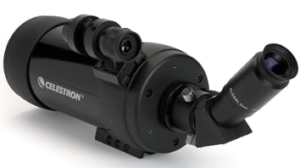
The Celestron C90 Maksutov-Cassegrain Spotting Scope is a versatile option for birding, long distance observation, and amateur astronomy. Its 90mm aperture and 1250mm focal length make it suitable for examining distant birds, observing lunar craters, and viewing bright planets. The compact optical tube combines mirrors and lenses to provide substantial magnification without the length of a traditional refracting telescope.
Its multi coated optics and Maksutov-Cassegrain design help deliver sharp, high contrast images. The 90mm objective gathers useful amounts of light for terrestrial observation and viewing bright celestial objects. However, performance on faint astronomical targets is limited compared with larger telescopes, and image brightness depends on the eyepiece, magnification, and observing conditions.
The C90 includes a 32mm Plössl eyepiece that provides approximately 39x magnification, along with a 45 degree erect image diagonal for comfortable terrestrial viewing. Its standard 1.25 inch eyepiece compatibility allows users to experiment with additional astronomy eyepieces to change magnification. An included 8×21 finderscope helps locate subjects before viewing them through the main optics.
Photography is another useful capability. With a compatible optional T adapter and camera ring, the C90 can be adapted for capturing images of the Moon and distant terrestrial subjects. Its approximately seven inch optical tube is convenient for travel, camping, and portable observing, although the complete setup still benefits from a sturdy tripod.
Specifications
- Model: Celestron C90 Maksutov-Cassegrain 52268-CGL
- Optical Design: 90mm Maksutov-Cassegrain catadioptric
- Objective Aperture: 90mm
- Focal Length: 1250mm
- Magnification: Approximately 39x with the included eyepiece
- Included Eyepiece: 32mm Plössl
- Eyepiece Compatibility: Standard 1.25 inch astronomy eyepieces
- Viewing Diagonal: 45 degree erect image diagonal
- Optical Coatings: Multi coated optics
- Finderscope: 8×21 erect image finderscope
- Weight: Approximately 4.62 lbs
- Optical Tube Length: Approximately 7 inches
- Camera Compatibility: Adaptable with optional T adapter and camera ring
- Weather Protection: Not waterproof or fogproof
- Warranty: Limited lifetime warranty, subject to applicable terms
Pros
- Versatile design for birding, long distance viewing, and amateur astronomy
- 90mm aperture supports detailed views of distant subjects and bright celestial objects
- Long focal length is useful for lunar and planetary observation
- Multi coated optics help produce sharp, high contrast images
- Accepts interchangeable 1.25 inch astronomy eyepieces
- Included 45 degree diagonal supports comfortable terrestrial viewing
- Erect image configuration is suitable for observing birds and wildlife
- Compact optical tube is convenient for travel and camping
- Compatible with cameras using suitable optional adapters
- Included finderscope helps locate distant subjects and celestial objects
- Competitive value for users seeking both spotting scope and telescope functionality
- Limited lifetime warranty offers additional ownership reassurance
Cons
- Not waterproof or fogproof, limiting use in rain and humid outdoor conditions
3) Celestron C5 Schmidt-Cassegrain Spotting Scope
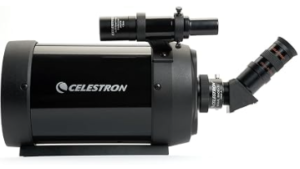
The Celestron C5 Schmidt-Cassegrain Spotting Scope is a versatile optical instrument for birding, long distance terrestrial observation, and astronomy. Its 5 inch (127mm) aperture gathers considerably more light than typical 60mm or 80mm spotting scopes, helping reveal fine details in distant subjects and bright celestial objects. With a 1250mm focal length, it is particularly useful for observing the Moon, planets, and other astronomical targets.
The C5 uses Schmidt-Cassegrain optics with StarBright XLT coatings to improve light transmission and image contrast. Its optical design combines mirrors and lenses in a compact tube, measuring approximately 11 inches long. Users have reported impressive detail when observing distant targets, including small marks at hundreds of yards, although actual resolution depends on atmospheric conditions, focus, and optical alignment.
For terrestrial viewing, the included 45 degree erect image diagonal presents subjects in the correct orientation, making it suitable for observing birds and wildlife. The supplied 25mm Plössl eyepiece provides approximately 50x magnification, while the standard 1.25 inch eyepiece fitting allows users to explore other magnifications with compatible astronomy eyepieces. A 6×30 erect image finderscope helps locate subjects before viewing them through the main optics.
The C5 also supports digiscoping with a compatible optional T adapter and camera ring. This allows users to capture images of the Moon, planets, and distant terrestrial subjects. Its six pound weight is relatively manageable for a telescope with a 127mm aperture, but a sturdy tripod is important for maintaining a steady image at high magnification.
Specifications
- Model: Celestron C5 Schmidt-Cassegrain, 52291-CGL
- Optical Design: Schmidt-Cassegrain catadioptric
- Aperture: 127mm (5 inches)
- Focal Length: 1250mm
- Focal Ratio: f/10
- Magnification: Approximately 50x with the included eyepiece
- Included Eyepiece: 25mm Plössl
- Eyepiece Compatibility: Standard 1.25 inch astronomy eyepieces
- Viewing Diagonal: 45 degree erect image diagonal
- Optical Coatings: StarBright XLT multi coatings
- Finderscope: 6×30 erect image
- Weight: Approximately 6 lbs
- Tube Length: Approximately 11 inches
- Weather Protection: Not waterproof or fogproof
- Warranty: Limited lifetime warranty, subject to applicable terms
Pros
- Large 127mm aperture gathers substantial light for terrestrial and astronomical observation
- StarBright XLT coatings help improve light transmission and contrast
- Detailed views of distant subjects, the Moon, and bright planets
- Compact optical tube relative to its aperture
- Included erect image diagonal supports correctly oriented terrestrial viewing
- Compatible with interchangeable 1.25 inch astronomy eyepieces
- Supports photography with suitable optional camera adapters
- Included 6×30 finderscope helps locate distant subjects
- Approximately 20 foot close focus distance supports some nearby wildlife observation
- Useful for both birding and amateur astronomy
- Supplied eyepiece, diagonal, finderscope, and carrying case add convenience
- Limited lifetime warranty offers additional ownership reassurance
Cons
- Six pound weight requires a stable tripod for high magnification viewing
4) Gosky 25-75×80 Spotting Scope
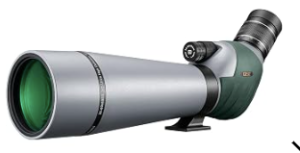
The Gosky 25-75×80 ED Spotting Scope is designed for birding, wildlife observation, target shooting, and casual astronomy. Its variable 25x to 75x magnification lets you scan open areas and zoom in on distant subjects. The 80mm objective lens gathers light for bright daytime viewing and occasional observation of the Moon.
Its ED (Extra Low Dispersion) optics, BAK4 Porro prisms, and fully multi coated lenses are designed to improve image clarity, contrast, and color accuracy. These features help reduce distracting color fringing when observing birds, wildlife, and distant targets. The 45 degree angled eyepiece also provides a comfortable viewing position during extended sessions.
A dual speed focusing system provides coarse and fine adjustments, helping you bring distant subjects into focus more precisely. The 24mm eyepiece and 18 to 19.5mm eye relief support comfortable viewing, including for many glasses wearers. A retractable sunshade helps reduce glare in bright conditions, while rubber armor adds grip and protection.
The scope has a sealed, nitrogen filled construction designed to resist water and internal fogging. At approximately 4.4 pounds and 19.69 inches long, it is less compact than smaller travel scopes, so a suitable tripod is recommended for stable viewing at higher magnifications.
For astronomy enthusiasts, the Gosky can provide enjoyable views of the Moon and its larger craters, along with casual views of brighter celestial objects.
The included smartphone digiscoping adapter allows you to capture photos and videos through the eyepiece using compatible iPhone and Android devices. With its broad zoom range and ED optics, the Gosky is a versatile choice for users seeking stronger optical features without moving into premium spotting scope prices.
Specifications
- Model: Gosky 25-75×80 ED Dual Focusing Spotting Scope
- Model Number: SP-DUAL206080ED
- Magnification: 25x to 75x variable zoom
- Objective Lens: 80mm
- Optical Design: Porro prism with BAK4 glass
- Lens Coating: Fully multi coated (FMC), with ED optics
- Eyepiece: 45 degree angled, rotatable, 24mm diameter
- Field of View: 147 to 69 feet at 1,000 yards
- Eye Relief: 18 to 19.5mm
- Minimum Focus Distance: Approximately 30 feet
- Focus System: Dual speed coaxial focusing
- Weight: Approximately 4.4 lbs
- Weather Protection: Sealed, nitrogen filled, waterproof and fogproof construction
- Included Accessories: Smartphone adapter, carrying case, and two lens caps
- Warranty: 1 year manufacturer warranty
Pros
- ED optics help deliver clear images with improved color accuracy.
- 80mm objective lens gathers light for daytime viewing and lunar observation.
- 25x to 75x zoom provides flexibility for birding and distant targets.
- BAK4 prisms and fully multi coated lenses support brightness and contrast.
- Dual speed focusing makes coarse and fine adjustments easier.
- Angled, rotatable eyepiece offers comfortable viewing positions.
- Generous eye relief accommodates many glasses wearers.
- Waterproof and fogproof construction supports outdoor use.
- Rubber armor improves grip and helps protect the scope.
- Smartphone adapter supports wildlife photography and digiscoping.
- Useful for birding, wildlife observation, and target shooting.
- Provides enjoyable views of the Moon and larger lunar features.
Cons
- At 4.4 pounds, it is heavier than compact spotting scopes.
5) Gosky 20-60×85 Spotting Scope
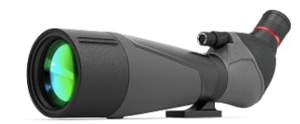
The Gosky 20-60×85 Spotting Scope is a budget friendly option for birding, wildlife observation, and casual astronomy. Its variable 20x to 60x magnification lets you scan wide areas for birds before zooming in on distant details. The 85mm objective lens gathers plenty of light for daytime viewing and occasional moon gazing.
Its BAK4 prism system and fully multi coated lenses are designed to deliver bright, clear images with good contrast. The 45 degree angled eyepiece and 23mm viewing window make extended observation more comfortable, while twist up eyecups and 15 to 16.2mm eye relief accommodate many glasses wearers.
Weighing just 2.43 pounds without the tripod, this spotting scope is relatively easy to carry on hikes and birding trips. Its IPX5 waterproof rating and nitrogen filled construction provide protection against rain and internal fogging, making it suitable for outdoor use in changing weather.
The included full size adjustable tripod extends from 13.3 to 63 inches and features a bubble level. A smartphone adapter also allows digiscoping, so you can capture photos of birds and wildlife through the eyepiece. A carrying case, lens covers, and cleaning accessories add convenience.
For around $179.99, the Gosky offers a generous set of features for beginners and casual observers. It can also be used for viewing the Moon and checking targets at a shooting range.
Specifications
- Model: Gosky 20-60×85 Spotting Scope
- Magnification: 20x to 60x variable zoom
- Objective Lens: 85mm
- Eyepiece: 45 degree angled, 23mm diameter
- Optical Design: Porro prism
- Prism Glass: BAK4
- Lens Coating: Fully multi coated
- Field of View: 101 to 48 feet at 1,000 yards
- Eye Relief: 15 to 16.2mm
- Minimum Focus Distance: 24 feet
- Weight: 2.43 lbs for the scope; 6.2 lbs with tripod
- Weather Protection: IPX5 waterproof, nitrogen filled fogproof design
- Tripod: Adjustable from 13.3 to 63 inches, with bubble level
- Included Accessories: Smartphone adapter, carrying case, cleaning cloth, air blower, cleaning pen, and lens covers
- Warranty: 1 year manufacturer warranty
Pros
- 85mm objective lens provides good light gathering for daytime observation.
- 20x to 60x zoom supports both wide area scanning and detailed viewing.
- BAK4 prisms and fully multi coated lenses support bright, clear images.
- Angled eyepiece offers comfortable viewing for birding and wildlife observation.
- Lightweight scope body is convenient for hikes and outdoor trips.
- Waterproof and fogproof construction suits changing outdoor conditions.
- Smartphone adapter makes wildlife photography and digiscoping possible.
- Includes a tripod and useful cleaning and carrying accessories.
- Good value for beginners and casual users on a limited budget.
- Suitable for moon viewing and shooting range observation at moderate distances.
Cons
- Included tripod may be too flimsy for stable viewing at 60x magnification.
6) SVBONY SV28 25-75×70 Spotting Scope
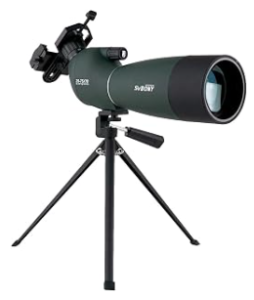
The SVBONY SV28 25-75×70 Spotting Scope is an affordable option for birding, wildlife observation, target shooting, and casual astronomy. Its 25x to 75x variable magnification helps you scan outdoor areas and zoom in on distant subjects. The 70mm objective lens gathers light for daytime viewing, while the compact design makes it convenient to carry on outdoor trips.
The scope uses BAK4 prism glass and fully multi coated lenses to support image brightness and contrast. Its 45 degree angled eyepiece provides a comfortable viewing position, and the fold down eyecup accommodates many glasses wearers. A retractable sunshade also helps reduce glare in bright conditions.
Weighing approximately 2.01 pounds and measuring 14.17 inches long, the SV28 is easy to pack for birding walks and backyard wildlife observation. Its sealed, nitrogen filled construction is designed to resist water and internal fogging. Manual zoom and focus controls allow adjustments as you move between nearby birds and distant subjects.
For astronomy, the SVBONY SV28 can be used to observe the Moon and explore some brighter celestial objects.
At around $59.99, this spotting scope offers an accessible entry point for beginners. It includes a lightweight desktop tripod, a universal smartphone adapter, a carrying case, lens covers, and a cleaning cloth. The small tripod is best suited to tabletop or bench use, and a sturdier tripod may be worthwhile for more stable viewing at higher magnifications.
Specifications
- Model: SVBONY SV28 25-75×70 Angled Spotting Scope
- Magnification: 25x to 75x variable zoom
- Objective Lens: 70mm
- Eyepiece: 45 degree angled, 15mm diameter
- Optical Design: Porro prism
- Prism Glass: BAK4
- Lens Coating: Fully multi coated
- Field of View: 64 to 43 feet at 1,000 yards
- Eye Relief: 14 to 16mm
- Minimum Focus Distance: Approximately 26 feet
- Weight: 2.01 lbs
- Weather Protection: IP65 rated, waterproof and fogproof design
- Focus System: Manual zoom and focus
- Included Accessories: Desktop tripod, universal phone adapter, carrying case, lens covers, and cleaning cloth
- Warranty: Lifetime coverage for defects, with a 60 day return period as provided in the supplied product information
Pros
- Affordable price for beginners and casual outdoor observers.
- 25x to 75x variable zoom provides flexible magnification.
- 70mm objective lens supports daytime birding and wildlife viewing.
- BAK4 prisms and fully multi coated lenses help maintain image brightness.
- Angled eyepiece offers a comfortable viewing position.
- Lightweight, compact design is convenient for travel and hikes.
- Waterproof and fogproof construction is suitable for outdoor use.
- Smartphone adapter allows digiscoping and wildlife photography.
- Included carrying case and lens covers simplify transport and storage.
- Useful for Moon viewing and observing brighter celestial objects.
- Suitable for checking targets at moderate shooting range distances.
Cons
- Image clarity can decrease at the highest magnification settings.
Check also: 7 Best Budget Spotting Scope for Target Shooting
Advantages of Using the Best Spotting Scope for Birding and Astronomy
Versatile Magnification for Distant Viewing
A spotting scope provides higher magnification than standard binoculars, making it easier to observe distant birds, identify wildlife, and examine fine details. Adjustable zoom allows you to scan wide areas at lower power and magnify specific subjects when needed. This versatility is useful for birdwatching, wildlife observation, and viewing distant objects across open landscapes.
Bright, Clear Images with Detailed Optics
Large objective lenses gather more light, helping produce brighter images in suitable lighting conditions. Quality prism systems, fully multi coated lenses, and extra low dispersion glass can improve contrast, color accuracy, and image sharpness. These features help birders distinguish plumage patterns and identify species while also providing detailed views of the Moon and its larger craters.
Enjoyable Birding and Wildlife Observation
A spotting scope makes it easier to observe birds that are far away without disturbing their natural behavior. Higher magnification helps reveal features such as feather markings, beak shapes, and subtle differences between similar species. It is particularly useful for shorebirds, waterfowl, raptors, and wildlife across wetlands, grasslands, and open habitats.
Opportunities for Casual Astronomy
A spotting scope can serve as an accessible introduction to astronomy, especially for observing the Moon. With sufficient magnification and stable support, users can examine prominent lunar craters and surface features. Some brighter celestial objects may also be visible, although views of planets and deep sky objects are generally more limited than with a dedicated astronomical telescope.
Smartphone Photography and Digiscoping
Many spotting scopes support smartphone adapters that let users photograph or record what they see through the eyepiece. This makes it possible to document bird sightings, share wildlife observations, and capture lunar images without buying a dedicated camera system. Results depend on the optics, phone alignment, lighting, and stability of the setup.
Portability and Outdoor Versatility
Spotting scopes are useful for a variety of outdoor activities, including birding trips, nature walks, wildlife watching, and target observation. Compact models are easier to carry, while larger models often provide better light gathering. Weather resistant construction can also help protect the instrument during outdoor use. Choosing a suitable tripod improves stability, particularly at higher magnifications.
Factors to Consider When Choosing the Best Budget Spotting Scope for Target Shooting
Magnification Range
Magnification determines how clearly you can inspect targets at different distances. For most recreational target shooting, a spotting scope with a variable range of around 20x to 60x offers a useful balance between a wide viewing area and detailed observation. Lower magnification makes it easier to locate the target, while higher magnification helps examine bullet holes and group patterns. Keep in mind that maximum magnification is only useful when the optics and viewing conditions can support a sharp image.
Objective Lens Diameter
The objective lens affects how much light enters the scope, influencing image brightness and visibility. Budget models commonly offer lenses between 60mm and 80mm. A larger lens can be helpful when inspecting targets in overcast conditions or at longer distances, although it usually increases the scope’s size and weight. For daytime range use, a 60mm to 80mm objective lens is a practical starting point.
Optical Quality and Image Clarity
Clear optics are essential for distinguishing small bullet holes, scoring rings, and closely grouped shots. Look for fully multi coated lenses and quality prism glass, which can help improve light transmission, contrast, and image sharpness. Extra low dispersion glass can further reduce color fringing, although it may cost more. A scope that produces a clear image at moderate magnification is often more useful than one with a higher advertised zoom but poor detail.
Field of View and Focusing
Field of view describes how much of the target area you can see through the scope. A wider field at lower magnification helps you locate the target quickly, while a narrower field at higher magnification allows closer inspection. Smooth focusing controls are also important because they help bring bullet holes and target markings into sharp view. A dual speed focusing system can be especially useful for making both quick and fine adjustments.
Tripod Stability and Mounting
High magnification makes even small movements more noticeable, so a stable tripod is essential for accurate target inspection. Some budget scopes include a basic tabletop tripod, which may work on a bench but can be inconvenient at a standing shooting position. Check the mounting thread and tripod compatibility before buying. A sturdier tripod can reduce vibration and make it easier to maintain a clear image at higher zoom levels.
Durability and Weather Protection
A spotting scope used outdoors should withstand regular transport, dust, and changing weather. Waterproof and fogproof construction helps protect the internal optics from moisture, while rubber armor can improve grip and reduce the risk of minor impact damage. Check whether the scope is genuinely sealed and nitrogen or argon filled rather than assuming every weather resistant model offers the same protection. Durable construction can reduce the likelihood of needing a replacement.
Price, Accessories, and Warranty
A good budget spotting scope should offer dependable performance without requiring expensive additions. Compare the price with the included tripod, carrying case, lens covers, and smartphone adapter, if provided. Consider whether the included accessories are practical or whether you will need to buy a more stable tripod separately. Finally, review the warranty and return policy so you have options if the scope arrives damaged or its optical performance does not meet expectations.
Best Spotting Scope for Birding and Astronomy FAQs
What Magnification Is Best for Birding and Astronomy?
A spotting scope with variable magnification between 20x and 60x is a versatile choice for birding and casual astronomy. Lower magnification provides a wider field of view for locating birds, while higher magnification helps reveal feather details and distant subjects. For astronomy, higher magnification can help examine lunar craters, but image stability, optical quality, and atmospheric conditions are equally important.
Can You Use a Spotting Scope for Birdwatching and Astronomy?
Yes, a spotting scope can serve both purposes. It is designed for terrestrial viewing, making it useful for observing distant birds, wildlife, and landscapes. It can also provide enjoyable views of the Moon and some brighter celestial objects. However, spotting scopes generally have more limited capabilities for detailed planetary observation and deep sky viewing than dedicated astronomical telescopes.
What Features Should You Look for in a Budget Spotting Scope for Birding and Astronomy?
Look for adjustable magnification, an objective lens of around 60mm to 85mm, quality coated optics, and a stable tripod mount. An angled eyepiece can improve comfort during extended viewing, while waterproof and fogproof construction helps protect the scope outdoors. A smartphone adapter is useful for capturing photos, but prioritize image clarity, focusing performance, and tripod stability over the highest advertised magnification.
Conclusion
Choosing the best spotting scope for birding and astronomy depends on your budget, preferred magnification, optical quality, and intended use.
A scope with clear optics, a large objective lens, smooth focusing, and a stable tripod can deliver detailed bird and wildlife views while providing enjoyable observations of the Moon.
Consider weather protection, portability, and smartphone compatibility to get the most from your investment. By comparing these features and balancing performance with price, you can find a versatile spotting scope for outdoor exploration and casual stargazing.